The Body
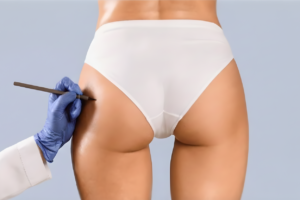
I will also discuss all the possible complications of BBL:
those I have experienced,
those I have not experienced,
and above all, I will give you the keys to understanding how to prevent complications after BBL surgery as much as possible.
The aim is to be transparent and share my real-life experience, having performed over 1,000 BBLs and hip dip lipofilling procedures since I started practising.
Here is a list of possible complications after a BBL:
- Fat embolism
- Asymmetry
- Infection
- Bleeding
- Disappointing results after a BBL
- Complications related to liposuction
- Bad odour after a BBL
Fat embolism: the most feared complication of BBL
Fat embolism is by far the main concern for patients interested in BBL. It is a topic that comes up consistently whenever Brazilian Butt Lift is mentioned, and for good reason: it is the most serious complication, as it can be potentially fatal.
A bit of history: why did the BBL have a bad reputation?
In 2017, in Florida, a survey showed that there was one death for every 3,000 patients who underwent BBL surgery.
This is an extremely high figure, which made headlines in the media.
Why such a high mortality rate?
Mainly because, in South Florida, a large proportion of procedures were performed in low-cost clinics catering to medical tourism.
In these centres, BBLs were performed on an assembly line basis, at very attractive prices… but often at the expense of safety.
It was then discovered that these clinics were injecting fat directly into the gluteal muscle.
However, the muscle contains large blood vessels.
When fat is injected into a vessel, it can:
- migrate to the vena cava,
- travel up to the heart,
- reach the lungs,→ and cause a massive fat embolism, which can sometimes be fatal.
How has this risk been reduced since then?
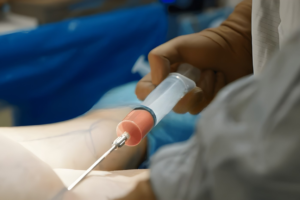
Fortunately, since 2017, great progress has been made. Today, we know that the key to preventing fat embolisms is to ensure that the fat is injected strictly into the subcutaneous fatty tissue, and never into the muscle.
To this end, several essential safety measures exist:
1. Ultrasound-guided BBL or safe BBL
It allows real-time visualisation of the cannula during injection, in order to verify that it is in the fat and not in the muscle.
It is now considered one of the safest standards.
I am still surprised that in Switzerland (both in French-speaking and German-speaking Switzerland), I am currently the only clinic to offer ultrasound-guided BBLs using a Clarius device.
In my opinion, this makes a major difference in terms of safety.
2. The use of 4 mm rigid cannulas
They allow for better depth control and reduce the risk of unintentionally penetrating the muscle.
3. Have the operation performed by an experienced surgeon
Experience in this type of procedure is a key factor:
the more BBLs a surgeon has performed, the better they are at recognising anatomical planes and minimising risks.
What is the actual risk today?
Thanks to all these measures, the risk has been drastically reduced:
In 2017: 1 case of fat embolism per 3,000 BBLs
Today: approximately 1 case per 20,000
And in centres using ultrasound guidance, with an experienced team:
between 1 case per 20,000 and 1 case per 100,000
➡️ This is a lower risk than many other common cosmetic surgeries.
For my part, after performing more than 1,000 BBLs, I have been fortunate to never have had a case of fat embolism in my practice.
Asymmetries after a BBL
Asymmetries are one of the most common complications of BBL. They can occur even when the procedure is performed perfectly, as they depend as much on the surgical technique as on the individual’s body reaction.
The EVL technique: maximising fat absorption
To optimise the result, I systematically use the EVL (Expansion Vibration Lipofilling) technique.
This allows a significant amount of fat to be injected:
- into both buttocks,
- and into the hip dip area,
- resulting in a more harmonious curve.
However, even with optimal technique, some of the fat will inevitably be reabsorbed after the procedure.
The fat resorption rate: the major variable
In my practice, I have observed a resorption rate of approximately 20 to 30%, but medical literature sometimes reports rates as high as 40 to 50%.
This resorption rate is impossible to predict and may differ between the right and left buttocks, creating asymmetry.
How can the risk of asymmetry be reduced?
One of the keys is to inject fat of similar quality on both sides.
This is because the fat injected at the beginning of liposuction does not have exactly the same properties as the fat injected at the end.
To avoid this, I always inject alternately:
- 100 ml on the left,
- 100 ml on the right,
- then 100 ml on the left again,
- and 100 ml on the right, and so on.
This ensures that each side receives the same type of fat, which increases the chances of symmetrical resorption.
Cellulite: an often overlooked factor
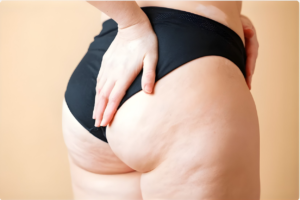
Another common cause of asymmetry is cellulite, especially in the posterior area of the buttocks.
Even after fat injection, pre-existing cellulite depressions may persist, sometimes giving the impression of asymmetry.
The essential role of the post-operative protocol in symmetry
A fundamental element in preventing asymmetry is strict adherence to the post-operative protocol.
The reinjected fat is very fragile during the first few weeks.
Any pressure on a grafted area can increase resorption and thus create asymmetry.
It is therefore crucial, for at least two months, to:
- do not sleep on your bottom,
- do not sleep on your sides.
There are two solutions for this:
- Sleep on your stomach, which remains the simplest and most effective method.
- Use a mattress with special openings, allowing you to place your buttocks or hip dips in a pressure-free space while sleeping comfortably on your back.
Removing all pressure during this period significantly increases fat gain and reduces the risk of asymmetry.
Asymmetries… but simple solutions
Fortunately, asymmetries after a BBL are relatively easy to correct.
The solution often involves:
- performing targeted liposuction,
- followed by corrective lipofilling, usually six months after the procedure (once the fat has stabilised).
At the Bellefontaine Clinic, as many of my patients know, I always have patients stand up at the end of the procedure.
This allows me to check symmetry immediately and make adjustments if necessary before the end of the surgery.
If asymmetry appears in the following months, it is beyond our control, as it results from differential fat resorption — a biological phenomenon that cannot be controlled 100%.
Infections after BBL
Infections are a potential complication of any surgical procedure.
That said, in the context of BBL, their frequency is extremely low, both for liposuction and for lipofilling of the buttocks or hip dips.
In my practice, I have never had a case of infection after a BBL or after lipofilling of hip dips. I have only once observed an infection after breast lipofilling (in a patient who immediately reinserted a nipple piercing after her procedure), but never on the buttocks or hips.
Which antibiotics are prescribed?
I always prescribe post-operative antibiotic coverage, generally:
- Ciprofloxacin 500 mg, twice daily for five days,
or - Augmentin 625 mg, three times daily for five days.
This protocol greatly helps to reduce the risk of infection.
Bleeding
As with any surgical procedure, bleeding may occur during a BBL.
However, in the vast majority of cases, this bleeding is minimal, expected and normal.
Bruises and contusions: common but not a cause for concern
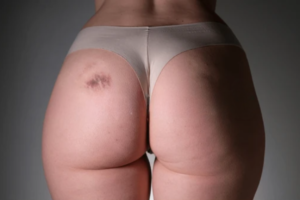
After a BBL, it is completely normal to experience:
- bruising,
- ecchymosis,
- significant swelling,
for 2 to 3 weeks.
This is not considered a complication: it is a normal physiological reaction of the body.
Heavy bleeding: extremely rare
Bleeding severe enough to require a transfusion is exceptional.
In my own experience:
➡️ I have never had to transfuse a patient after a BBL.
A colleague in southern Spain, who also performs a large number of BBLs, told me that he sees 1–2% transfusions in his practice, but this has never happened in mine.
How can bleeding be prevented?
To minimise this risk, I use:
- adrenaline solutions during liposuction,
- which reduce capillary bleeding
- and provide optimal control of the surgical field.
When certain areas bleed a little more than usual, these adrenaline-based solutions generally allow us to control the situation perfectly.
Disappointment after a BBL
Disappointment is a complication that can occur after BBL surgery. It usually happens because patients still consider their buttocks to be too small after the procedure.
Volume decreases after resorption
As I always explain during consultations, it is impossible to predict exactly how much fat will survive.
In my practice, resorption is generally 20 to 30% in the buttocks and hip dips — so relatively low.
However, the literature sometimes describes resorption rates of up to 40–50%.
The consequence is simple:
➡️ Some of the volume obtained immediately after the operation will decrease in the following weeks.
This can lead to disappointment if initial expectations were very high.
It should be noted that, in comparison:
- resorption is much greater in the breasts, which explains the differences between breast lipofilling and buttock lipofilling.
Overly tight skin: a limiting factor
In some patients — often young and slim — the skin on the buttocks is very tight.
In these cases, there is a physical limit to the amount of fat that can be injected:
➡️ Injecting too much would increase the risk of compressing the fat cells,
➡️ which could cause fat necrosis,
➡️ and even greater resorption.
This is why I always favour a reasonable increase, based on the actual capacity of the skin.
When a second round is necessary
To achieve greater volume, it is often necessary to schedule a:
- second round of BBL,
- 6 months to 1 year after the first procedure.
This allows:
✔️ the skin to soften,
✔️ optimise fat survival rates,
✔️ achieve greater volume in two stages without risk.
What about buttock implants?
I always speak cautiously about this, because in my practice, I frequently advise against buttock implants.
Why?
Because I regularly have patients who come to have their implants removed that were placed in other clinics, often because:
- painful pressure on the sciatic nerve,
- chronic discomfort,
- or long-term discomfort.
In most cases, these patients then wish to replace the implants with a BBL, which is much better tolerated and more natural.
Unpleasant odours after a BBL
Many patients come to my clinic saying they are afraid of having a bad odour after a BBL.
This is a surprisingly common concern — probably due to misinformation found on social media.
I can be very clear about this:
After performing more than 1,000 BBLs, I have never noticed any unpleasant odours associated with this procedure, despite what I hope is a perfectly functional sense of smell.
A BBL does not naturally cause unpleasant odours.
So where do these disturbing reports come from?
In the rare cases where a patient reports an unpleasant odour after the procedure, the cause is not the BBL itself, but a specific complication, such as:
- a post-operative infection,
- or fat necrosis (extremely rare).
It is these complications — not the BBL — that can potentially cause an unusual odour.
Conclusion
In conclusion, if you are considering having a BBL and want to minimise the risks associated with this procedure, there are several factors that must be checked.
Selecting a surgeon who performs ‘Safe BBL’
Choose a surgeon who:
- performs fat injections under ultrasound guidance,
- to ensure that fat is never injected into the gluteal muscles, where large blood vessels are located.
It is currently the safest standard for minimising the risk of fat embolism.
Ensure the surgeon is experienced
It is also important to check:
- that the surgeon is experienced,
- that they perform BBLs regularly,
- and that they use a 4 mm rigid cannula, recommended for optimal control of the injection depth.
Strictly adhere to the post-operative protocol.
To achieve a harmonious and lasting result, the quality of the surgery alone is not enough:
the post-operative period plays an essential role.
It is essential to:
- Avoid putting pressure on the injected areas.
- Use the buttock cushion correctly.
- Do not sleep on your side or back for two months in order to maximise fat uptake and avoid asymmetry or loss of volume.
If you are having the procedure done abroad
I strongly recommend staying in place for 2 to 3 weeks in order to:
- reduce the risk of deep vein thrombosis during the return journey,
- and avoid any premature pressure on the injected areas during the journey.
A final word
I hope you found this article useful and that it gave you a clear, honest and detailed insight into my BBL practice at the Bellefontaine Clinic here in Lausanne, Switzerland.
Thank you for reading.